

A showroom manager on a main road on Dublin's southside rang us at 7.40am one morning. He had just opened up to find silver tag lines sprayed across his fascia and a crack running through one glass panel. His first instinct, he admitted later, was to send a staff member out with a bottle of […]
What to Do When an Alarm Is Triggered by a Cleaning Team
It was a cold Tuesday in January, three weeks into a new showroom contract on the south side. Our regular operative was out sick, so a relief member of the team covered. He came in through the right door with the right code, but the panel had a shorter entry delay than the site sheet said, and the siren went before he reached the keypad. The monitoring station rang the client at five past nine. So did we, about ninety seconds later.
If a cleaning team triggers your alarm, the person on site should stay put, ring the listed keyholder immediately, and be ready to confirm identity. The keyholder should answer the monitoring station's call and give the account password to stand down the response. Afterwards, log the cause and fix it, usually codes or training.
If this is happening right now and you want a hand, our number is 086 083 6141.
What Actually Happens When a Monitored Alarm Activates
Most people never see the chain behind the siren, which is why an activation feels chaotic. It is actually quite orderly.
The panel and the entry delay. When a door on an entry route opens, the panel starts a countdown. Reach the keypad and enter a valid code inside that window and nothing happens. Miss it, or trip a sensor that is not on the entry route, and the panel signals full activation.
The signal reaches the alarm receiving centre. The ARC is the monitoring station. In Ireland these centres are certified to Irish Standard IS 228, and alarm monitoring sits inside the licensing regime overseen by the Private Security Authority.
Verification. This is the part that surprises people. An Garda Síochána's published policy on monitored intruder alarms provides response to verified activations, meaning the activation is confirmed by a second detection device in sequence, or by audio or visual inspection. A single sensor firing on its own is not treated the same way as a verified event.
The keyholder calls. The ARC works down the keyholder list you gave them. They will ask for your account password. That password is what lets you stand the response down.
Response. Depending on your contract, that means you attend, a security patrol attends, or a verified activation goes to the Gardai. Keyholders are expected to be able to attend, and a failure to attend after a verified activation is recorded as a false alarm.
Ten minutes, start to finish, if everyone knows their part.
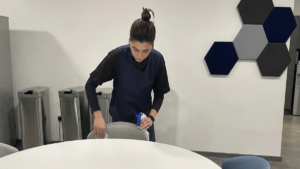
The First Five Minutes: Step by Step
Two short scripts. One for the person standing beside the siren, one for the person whose phone just lit up.
If You Are the Cleaner on Site
- Do not leave the building. Walking away turns an awkward moment into a suspected break in.
- Silence the panel only if you are trained and authorised to. If the code is not working, stop trying after two attempts. Repeated wrong entries can lock the panel or trigger a separate tamper condition.
- Ring your supervisor first, then the client keyholder. Say where you are, what door you used, and what the panel is showing.
- Have your ID ready and stay visible. If a patrol or a Garda car arrives, be somewhere obvious with identification in your hand, not in a back office with a hoover running.
- Do not carry on cleaning until it is stood down. Finish the conversation first.
If You Are the Keyholder Getting the Call
- Answer the ARC and give the account password. Without it they cannot act on anything you say.
- Check whether anyone is scheduled tonight. Cleaners, security, a contractor, a member of staff collecting a laptop. Most 9pm activations have a boring explanation.
- Ring the cleaning supervisor to confirm the crew is on site and safe. A quick voice confirmation is worth more than a text.
- Stand down or dispatch, then say which one clearly. Ambiguity is what generates unnecessary callouts.
- Write down the time, the zone and the cause while it is fresh. You will want it tomorrow.
Will You Be Charged for a False Alarm?
Possibly, and the honest answer is that it depends entirely on your paperwork.
Monitoring agreements and alarm response contracts in Ireland vary. Some include a set number of callouts, some charge per attendance, some charge only when a guard is physically dispatched. Before you assume anything, read your monitoring agreement or ring your provider and ask them directly what a false activation costs you.
The bigger cost is usually not money. Under the Garda policy on monitored intruder alarms, if three false alarms are recorded on an account within a rolling three month period, the monitoring centre is notified that Garda response will cease within seven days. Response is only reinstated after a clear period without false calls, generally at least three months. That is the consequence worth caring about. Losing response because of avoidable keypad errors is a genuinely poor trade.
Then there is the fair question of who pays when a contractor caused it. Our view is simple. If one of our team causes a chargeable activation through our error, we deal with it directly with the client and we do not make you chase us for it. We would rather absorb an awkward conversation than lose a client's trust over a callout fee.
Why Cleaning Teams Trigger Alarms (the Real Causes)
Almost every activation we have ever been involved in traces back to one of these.
The entry delay is too short. Thirty seconds sounds generous until you are carrying a caddy, a mop bucket and a vacuum through a lobby door. Fix: ask your alarm company to review the entry timing for the actual entry route.
Codes are shared, not assigned. When everyone uses the same code, nobody is accountable and nobody feels responsible for getting it right. Fix: a dedicated code for the cleaning contractor.
Relief staff on an unfamiliar panel. Cover for holidays and sick leave is where most incidents live. Fix: never send an unbriefed person alone to a site they have not walked.
The panel is behind a locked door. More common than you would think. The crew gets in the front door, then meets a locked comms room with the keypad inside it. Fix: check the physical route to the panel, not just the code.
A motion sensor sits before the keypad. If the walking route trips a PIR that is not part of the entry zone, the delay never helps. Fix: have the entry route and zone programming checked together.
Part set zones nobody explained. Some offices arm a server room or a stock area separately during the evening. A cleaner opening that door in good faith sets it off. Fix: mark part set areas clearly on the site sheet, and on the door.
The system was upgraded and nobody told the contractor. New panel, new codes, same cleaning schedule. Fix: notify your contractor the same day any alarm change is made.
Notice the pattern. Six of the seven are information problems, not competence problems.
How We Handle Alarms at Premier (Our Procedure)
Alarms are part of our onboarding, not something we improvise on night one.
A site specific alarm sheet. Agreed during the free site survey and signed off by the client. It records the entry door, the walking route to the panel, the entry delay in seconds, the zones, any part set areas, the disarm and rearm sequence, and the two people we ring if anything goes wrong.
The entry is rehearsed, not described. A supervisor walks the route with the operative and arms and disarms the system before the first solo visit. Our founder Catalin is firm on this one, and after the showroom night described below, so is everyone else here.
A dedicated cleaner code where the panel supports it. This is the single best control available. A dedicated code means activations are attributable, and if a member of staff moves on, that one code is revoked without disturbing anybody else's.
Codes are never written on keys, fobs or tags. Not on a keyring, not in a group chat. They are held securely and rotated whenever the team on either side changes.
One escalation path, known to everyone. Operative to supervisor to client keyholder. No guessing, no waiting.
Every incident is logged and shared. If we trigger an alarm, you hear it from us before you hear it from the monitoring station, and you get the cause in writing the next morning.
Our operatives are screened and trained before they carry a code for any site, and we are fully insured for the work we do on your premises. If your current provider cannot show you a site sheet like this, that is a reasonable thing to ask them for.
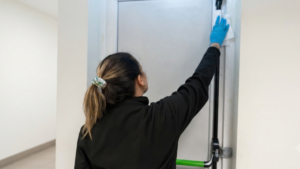
The Night We Got It Wrong, and What Changed
Back to that January showroom.
The site sheet said forty five seconds of entry delay. The panel had been reprogrammed to thirty during a service visit weeks earlier, and nobody had passed that on. Our relief operative did everything correctly and still set it off. He stayed at the front of the unit, rang his supervisor, and waited by the door with his ID visible.
The client's ARC rang their keyholder, who gave the password and stood the response down. Our supervisor rang the client at twenty past nine to explain what had happened, before the client had to ring us. That order of calls matters more than people realise.
Two things changed permanently afterwards. First, we now verify the entry delay ourselves at every site survey by timing the walk from the door to the panel, and we ask for it to be extended if the walk is tight. Second, relief staff are never sent alone to a site they have not previously worked. Either they are paired with someone who knows it, or the supervisor attends the first visit.
We would rather tell you about that night than pretend it never happens. Every cleaning company that works after hours has had one. The difference is what they built afterwards.
The Dublin Angle: Shared Buildings, Neighbours and Garda Response
In a detached unit an activation is your problem. In a Dublin multi tenant block it is everybody's.
An external siren in a dense city centre street at half nine wakes offices, apartments and the building's own security team. Managed blocks typically log the activation, and building management or the Owners Management Company may ask the tenant to account for repeat incidents. In some blocks the concierge is contractually obliged to record and report activations to the managing agent.
There is also a compounding effect. Repeated false activations wear down goodwill with neighbouring tenants long before they affect your Garda response status, and they tend to be remembered when contractor access rules are next reviewed.
One careful note on evidence. Where an activation is reviewed using CCTV, that footage is personal data, so handling and sharing it should follow your normal data protection obligations under GDPR rather than being passed around informally.
Prevention Checklist: Set Your Cleaners Up to Never Trigger It
- A written alarm sheet for the site, signed off by both sides
- A dedicated code for the cleaning contractor wherever the panel supports it
- Entry delay timed against the actual walk from door to panel, not guessed
- The route to the panel kept clear and unlocked during cleaning hours
- Part set zones marked on the site sheet and on the doors themselves
- Codes rotated whenever staff change on either side
- Any alarm service, upgrade or reprogramming notified to the contractor the same day
- Two keyholder names and numbers held by the cleaning company, and two held by you
- Relief and cover staff briefed or paired before their first visit
- A quarterly five minute review of codes, keyholders and the ARC contact list
[Image suggestion: cleaning operative in hi vis arriving at an office door at night with ID. Alt text: "vetted cleaning operative arriving for an after hours office clean in Dublin"]
Frequently Asked Questions
Who gets called when a business alarm goes off? The signal goes to your alarm receiving centre first. They verify what they can, then work down the keyholder list you supplied, asking for your account password. Depending on your contract, a patrol or Garda response follows if the activation is verified and nobody stands it down.
Do you get charged for false alarms in Ireland? It depends on your monitoring and response agreement, so check it rather than assume. The more serious consequence is set out in Garda policy, where three false alarms on an account within a rolling three month period lead to notice that Garda response will cease.
Should cleaners have their own alarm code? Yes, wherever the panel supports it. A dedicated code makes activations attributable, so you know instantly whether it was the cleaning team or something else, and it can be revoked on its own when staff change without disrupting anyone else's access.
Do Gardai respond to business intruder alarms? Garda policy provides response to verified activations, meaning confirmation by a second detection device in sequence, or by audio or visual inspection. Personal attack alarms are always responded to. Your monitoring provider can confirm how your specific system is set up and verified.
Can my cleaning company be a keyholder for my business? A cleaning contractor can hold keys and codes under a documented agreement with a signed key register. Keyholding offered as a standalone security service sits within the private security sector regulated by the Private Security Authority, so check what licences any dedicated keyholding provider holds.
What should a cleaner do if the alarm goes off? Stay on site. Stop entering codes after two failed attempts. Ring the supervisor, then the client keyholder. Wait somewhere visible with identification ready in case a patrol or Garda unit attends, and do not resume cleaning until the activation has been stood down.
How do I stop repeat false alarms from cleaners? Give the contractor a written alarm sheet and a dedicated code, time the entry delay against the real walking route, keep the path to the panel unlocked, mark part set zones, and notify the contractor the same day any alarm change is made.
Tired of 10pm Alarm Calls?
Nearly a decade of cleaning Dublin offices, showrooms, gyms and medical practices after hours has taught us that alarm activations are a preparation problem, not a luck problem.
During our free site survey we agree and rehearse your alarm procedure before the first clean. Entry route, timing, codes, zones, escalation names, all written down and signed off. Our teams are screened, trained and insured, and if a standard of clean is ever not right, our re clean guarantee means we come back and do it again at no cost.
If your current provider keeps setting off your alarm, we are happy to take a look and give you a straight opinion — get in touch through our contact page or browse our full commercial cleaning Dublin services.
Call 086 083 6141 or email enquiries@premiercontractcleaning.ie. We cover offices and commercial premises right across greater Dublin, seven days a week.

The fire itself lasted minutes. An electrical fault in a printer corner of a Dublin 2 office, caught early, out before the fire brigade even finished checking the building. The soot was a different story. The next morning the office manager found a grey film on desks two rooms away and black webs hanging in […]
A few winters ago, our phone rang at ten past six in the morning. A facilities manager on the other end, standing outside a ground floor office near the Dodder, trying to keep his voice level. The water had come in overnight and gone back out on its own. What it left behind was worse […]
A property manager at a multi tenant office block near Grand Canal Dock rang us on a Tuesday, standing in the bin store while he talked. The mixed dry recycling for the whole building had been tagged as contaminated two collections running, with a surcharge attached both times, and now the bin was overflowing into […]