

A showroom manager on a main road on Dublin's southside rang us at 7.40am one morning. He had just opened up to find silver tag lines sprayed across his fascia and a crack running through one glass panel. His first instinct, he admitted later, was to send a staff member out with a bottle of […]
What to Do When Cleaners Cannot Get Access After Hours
One October evening our crew pulled up outside a multi tenant office block near Grand Canal Dock at ten past nine. Two operatives, full kit, twenty minutes ahead of schedule. The fob that had worked for eleven months straight lit up red. The building had run a system upgrade over the weekend and nobody had told the tenant, so nobody had told us. What followed was twenty minutes of phone calls that we still use as a training example.
If cleaners cannot get access after hours, contact your building management or keyholder first, confirm the cause (deactivated fob, changed locks, alarm issue), and agree a same week recovery visit. Long term, set up a written access protocol with named keyholders, a signed key register and an agreed escalation contact.
If you are reading this at eight in the evening with a crew standing outside, you can ring us on 086 083 6141 and we will talk you through the order of calls.
Why After Hours Access Fails in Dublin Buildings
Access almost never fails because someone forgot to turn up. In our experience it fails for a handful of boring, repeatable reasons.
Deactivated fobs. Building systems get upgraded, credentials get wiped, and contractor fobs are the first ones to drop off the list because nobody in the building sits at the cleaning contractor's desk.
Fob permissions with a time window. A lot of Dublin managed blocks issue contractor fobs that only work between set hours. Move the clean an hour later and the fob is technically valid but refuses the door.
Alarm codes that changed quietly. An employee leaves, the code is rotated, and the cleaning company is the last party anyone thinks to notify.
Concierge shift gaps. A desk that is manned until nine is not manned at half nine. If your access depends on a person, it depends on that person's rota.
One physical key held by one person. The office manager is on annual leave in Lanzarote and the only key is in a drawer in their house.
Building management rules changing. Landlords and managing agents occasionally restrict out of hours contractor access after an incident, and tenants find out when their contractor is turned away.
The street itself. City centre road closures, event barriers and loading bay restrictions can make a rear entrance unreachable even when the door works perfectly.
None of these are exotic. All of them are preventable with a bit of paperwork.
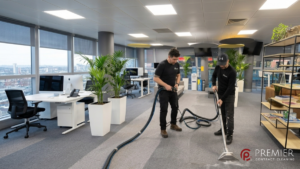
The First Hour: What to Do When the Crew Is Locked Out
This is the sequence we run ourselves, and it is the one we would give any facilities manager.
Get the exact failure from the crew. Ask what happened at the door. A dead fob, a fob that beeps but does not release, a changed lock, an alarm that will not disarm and a locked lobby are five different problems with five different fixes. "They could not get in" is not enough to act on.
Ring building management or the concierge desk. If the building has a managing agent out of hours number, that call comes first. In most managed blocks a fob can be reactivated remotely in minutes once someone confirms the contractor is on the approved list.
Ring your internal keyholder. Have two names, not one. If the first phone rings out at nine at night you want a second person who can physically attend or authorise release.
Check whether a keyholding provider holds spares. Some Dublin buildings and some tenants use a third party keyholding and alarm response firm. If you do, find out tonight what their callout response actually is, not next month.
If entry is genuinely impossible, stop and document. Note the time, the cause, who was called and what they said. Then agree a recovery visit in writing. A same week catch up clean is usually better for the office than doubling up next month.
The whole thing should take under thirty minutes. If it is taking two hours, the problem is not the door, it is that nobody agreed the escalation path in advance.
If the Building Has a Concierge or Security Desk
A concierge can usually release a door for anyone on the building's approved contractor list. What they generally cannot do is add a new name to that list at ten at night, or let a crew into a tenant suite that they hold no key for. That is why the contractor list matters more than the phone number. If your cleaning company is not on it by name, the concierge is not being difficult, they are following the rules they were given.
If Access Depends on One Physical Key
Older Georgian buildings around Dublin 2 and Dublin 4 often come down to a single physical key and no electronic system at all. One key, one holder, one point of failure. If that is your building, a small key safe with a code you control is the cheapest insurance you will ever buy.
Who Is Responsible for a Missed Clean?
Fairly, it depends on which side of the door the failure sat.
If the crew did not show, that is the cleaning company's problem and they should make it good without being chased. If the building changed a fob, rotated an alarm code or restricted contractor hours without telling anyone, that sits with the building or the tenant, and a decent contractor will still work with you to recover the visit rather than arguing about it.
The reason most disputes get messy is that nothing was written down at the start. When access arrangements, keyholders and escalation contacts are documented at onboarding, the cause of a lockout is obvious within one phone call and nobody spends a week emailing about it.
Our own approach is simple. If a visit is missed for an access reason, we rebook promptly and we tell you what went wrong. And if you are ever unhappy with the standard of a clean we have done, our re clean guarantee means we come back and do it again at no cost. Reliability is not a line on a proposal, it is what you notice at eight on a Monday morning.
How Professional Cleaning Companies Handle Access (Our Protocol)
Access is an operational discipline, not a favour you do at the start of a contract. Here is how we run it.
A signed key register. Every key, fob and code we hold is logged against a date, a named operative and a signature. Keys move between people only through that register. Our founder Catalin built the register system after seeing how casually keys were passed around elsewhere in the industry, and it has not changed much since, because it works.
Named keyholders, not "the team". A small, fixed group of vetted staff holds access for each site. Our operatives are recruited and screened properly before they ever carry a client's key, and we carry full insurance for the work we do on your premises.
Tags with no address on them. A key tag in one of our vans carries a reference code, never a building name or an address. If a set is ever mislaid, it is a set of keys, not a map to your office.
Alarm codes stored securely and rotated. Codes are not written in a WhatsApp group. They are held securely, and when a member of staff on either side changes, the code changes with them.
Agreed escalation contacts on both sides. Before day one we swap names and numbers. Ours for you, yours for us, with a second name each. That single sheet of paper is what turns a locked door into a five minute phone call.
Access tested at the site survey. During our free site survey we walk the actual route the crew will take. Which door, which fob, which lift, which alarm panel, who is on the desk and until what time. We test the entry method before the first clean, not during it.
If your current provider cannot show you a version of this, that is worth a conversation.
Keys vs Fobs vs Key Safes vs Concierge Release
| Access method | Best suited to | Watch out for |
| Held physical key | Small standalone offices, older Georgian buildings | Lost key means a lock change, so a signed register is essential |
| Access fob or card | Modern managed blocks in the Docklands, Sandyford and the IFSC | Time restricted permissions and deactivation after system upgrades |
| Key safe on site | Buildings with no electronic system, or shared occupancy | Code must be rotated when staff change, and the safe must be commercial grade |
| Concierge release | Multi tenant blocks with a manned desk | Only works within desk hours and only for named contractors on the list |
Most Dublin sites we look after end up using two of these, a primary method and a backup. That is the whole trick.
A Night It Went Wrong, and Why the Clean Still Happened
Back to Grand Canal Dock.
The fob was dead, and our supervisor's first call was to the building's out of hours number, which rang out. Second call was to the tenant's facilities contact, who was at home and did not have building access herself. Third call was the one that worked, the concierge company's regional mobile, which we had on file from the site survey twelve months earlier.
The building had migrated to a new access system over the weekend and rebuilt the contractor list from a spreadsheet that was two years old. Our fobs were simply not on it. The duty officer reactivated two credentials manually, and the crew were inside by twenty five past nine. The clean ran short by about twenty minutes and the team stayed on to finish the washrooms properly rather than skip them.
The useful part came the next morning. We asked the managing agent to add us to the building's permanent contractor register rather than the tenant's ad hoc list, and to notify us directly of any future system work. It has not happened again in that building since.
That is the difference between having a phone number and having a protocol.
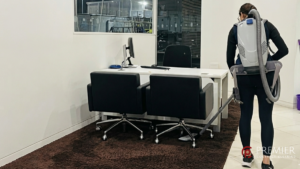
The Dublin Factor: Multi Tenant Blocks, OMCs and Building Rules
Dublin adds a few wrinkles that generic advice tends to miss.
A large share of the offices we clean sit in managed blocks in the Docklands, the IFSC and Sandyford, where contractor sign in is controlled by the building rather than the tenant. Your cleaning contract is with you, but your access is granted by somebody else entirely.
Common areas in mixed developments are typically controlled by an Owners Management Company, operating under the Multi Unit Developments Act 2011. The OMC sets the house rules for the lobby, the lifts and the bin store, and those rules can change without your lease changing at all.
Landlord house rules on out of hours contractor access vary widely across the city. Some blocks are happy with a crew at ten at night. Others cut contractor access at eight.
And then there is the street. Event closures around the city centre, Dublin City Council roadworks and loading restrictions can all block a rear service entrance on a given night, which is why our schedules for city centre sites carry a fallback entry route.
[Image suggestion: concierge desk in a multi tenant office lobby. Alt text: "concierge desk controlling contractor access in a Dublin office block"]
Preventing Access Failures: A Checklist for Facilities Managers
Run through this once and you will rarely think about it again.
- Access arrangements written into the cleaning contract, not agreed verbally
- Two named keyholders on your side, two on the contractor's side
- Out of hours contact numbers exchanged, including a mobile that is actually answered
- Cleaning company listed by name on the building's approved contractor register
- Fob expiry and review dates diarised, with a reminder a month ahead
- Any alarm code change notified to the contractor the same day it happens
- Concierge contractor list reviewed quarterly, especially after a building system upgrade
- A backup entry method agreed for every site, not just a primary one
- Key register available for inspection on request
- Access route physically tested before the first clean, and again after any building works
Frequently Asked Questions
Should I give my cleaning company a key to my office? Yes, provided the arrangement is documented. Look for a signed key register showing who holds what, vetted staff, unmarked key tags and proper insurance. A contractor who cannot show you those things is the risk, not the key itself.
Is it safe to give cleaners the alarm code? It is, with basic controls in place. The code should be held securely rather than shared informally, restricted to named operatives, and rotated whenever staff change on either side. Many sites also use a separate contractor code so activity can be identified on the panel log.
What is a keyholding service? It is a third party, usually a security firm, that holds spare keys for your premises and attends when needed, often alongside alarm response. Security contractors in Ireland are regulated by the Private Security Authority, so ask any provider which PSA licence categories they hold before signing.
What happens if my cleaners cannot get in? Confirm the exact cause at the door, ring building management or the concierge, then your internal keyholder, then any keyholding provider. If entry is impossible, log the incident with times and calls made, and agree a recovery visit that same week.
Who pays if a clean is missed because of access? It depends on where the failure sat. A no show is the contractor's responsibility. A deactivated fob or an unannounced code change usually sits with the building or the tenant. Documented access arrangements settle this in one phone call instead of a week of emails.
Do cleaning companies work evenings and weekends in Dublin? Yes. Most commercial cleaning in Dublin happens outside office hours. We schedule flexibly, including early mornings, evenings and weekends, and we build the schedule around your building's access windows rather than the other way round.
How do cleaners get into multi tenant buildings? Usually through a combination of an approved contractor list held by building management, a fob or access card issued to named operatives, and concierge release within desk hours. The OMC or managing agent sets the rules, so the contractor has to be registered with them, not just with you.
Never Lose a Clean to a Locked Door Again
Most access problems are solved before they happen, during a twenty minute walk around your building.
Our free site survey maps every access point on your site, the primary entry method, the backup, the alarm arrangement and the two people we ring if anything goes wrong. It happens before day one, not after the first missed visit. And once we are cleaning for you, our re clean guarantee means that if the standard is ever not right, we come back and do it again at no cost.
If your current provider keeps missing cleans because of access, we are happy to give you a second opinion with no pressure attached — get in touch through our contact page or explore our full commercial cleaning Dublin services.
Call 086 083 6141 or email enquiries@premiercontractcleaning.ie. We look after offices, showrooms, gyms and managed blocks right across Dublin, seven days a week.

The fire itself lasted minutes. An electrical fault in a printer corner of a Dublin 2 office, caught early, out before the fire brigade even finished checking the building. The soot was a different story. The next morning the office manager found a grey film on desks two rooms away and black webs hanging in […]
A few winters ago, our phone rang at ten past six in the morning. A facilities manager on the other end, standing outside a ground floor office near the Dodder, trying to keep his voice level. The water had come in overnight and gone back out on its own. What it left behind was worse […]
A property manager at a multi tenant office block near Grand Canal Dock rang us on a Tuesday, standing in the bin store while he talked. The mixed dry recycling for the whole building had been tagged as contaminated two collections running, with a surcharge attached both times, and now the bin was overflowing into […]