

Running a successful business in Dublin means paying attention to every detail — from how your clients are greeted to how your office space looks and feels. Cleanliness plays a much bigger role than most people realise. It shapes your company’s image, boosts employee morale, and even impacts health and productivity. But with dozens of […]
What Is the 3:30 Rule for Cleaning?
Have you ever looked around a busy construction site or an industrial workshop and felt overwhelmed by the clutter? Tools scattered, dust piling up, debris everywhere. It doesn't just look bad, it can slow down work, create safety hazards, and even lead to fines if inspections catch you off guard. That's where simple strategies like the 3:30 rule come in. This approach is all about making cleaning quick, regular, and effective, so you can focus on what you do best: getting the job done.
If you're a contractor, project manager, site supervisor, or even someone handling logistics for events, this rule could change how you handle maintenance. It's not some fancy system that requires expensive tools or extra staff. Instead, it's a straightforward way to build good habits that keep spaces tidy and productive. Random folks curious about cleaning tricks will find it useful too, but for professionals in demanding fields, it solves real problems like time shortages and compliance needs. In this post, we'll break it down step by step, share examples from the field, and show why it's worth trying. By the end, you'll see how small changes add up to big results.
Understanding the Basics of the 3:30 Rule
The 3:30 rule, sometimes called the 3 30 method of cleaning, started as a home hack but has spread to professional settings because it's so practical. At its core, it means doing three short cleaning sessions each day, each lasting 30 minutes. That's a total of 90 minutes spread out, not all at once. The idea comes from busy parents and homeowners who needed a way to stay on top of messes without devoting hours to it. One popular version popped up on social media from a mom juggling kids and chores, and it caught on fast.
In a professional context, think of it like this: instead of letting dirt and disorder build up until it's a huge task, you tackle it in bite sized chunks. For example, in a construction company, that might mean clearing tools after a morning shift, wiping down equipment in the afternoon, and doing a quick safety check before closing. No checklists are required, just focus on what's most urgent in that moment. This flexibility is key because no two days on a site are the same. Weather changes, unexpected delays, or supply issues can throw off schedules, so the rule lets you adapt without stress.
Why 30 minutes specifically? It's long enough to make real progress but short enough to fit into breaks or transitions. Studies on productivity, like those from workplace efficiency experts, show that timed tasks create urgency, helping people work faster and smarter. In cleaning terms, that means you prioritize high impact areas, like removing trip hazards or sanitizing shared tools, rather than getting bogged down in perfection. For industrial firms, this ties into lean management principles, where waste including messy workspaces gets minimized to boost output.
Why the 3:30 Rule Matters for Professionals
For construction companies and contractors, a clean site isn't just nice, it's essential. Irish health and safety laws, enforced by the Health and Safety Authority, require workplaces to be free of hazards that could cause slips, falls, or injuries. A cluttered area might lead to accidents, downtime, or even legal troubles. The 3:30 rule helps here by turning cleaning into a routine that prevents problems before they start. Imagine a small contractor wrapping up a home renovation: quick sessions ensure debris doesn't pile up, keeping clients happy and reducing complaints.
Industrial and maintenance firms benefit too. In factories or warehouses, dust and grime can damage machinery or contaminate products. Regular short cleans keep things running smooth, cutting repair costs. Data from industry reports shows that well maintained spaces can reduce equipment failures by up to 20 percent, which matters because every hour of downtime hits the bottom line. Project managers and site supervisors often juggle multiple tasks, so this rule fits without adding overload. For event and logistics teams, think about setting up tents or stages: timed cleans during setup ensure everything stays professional, impressing clients and avoiding last minute scrambles.
Even random readers interested in the topic can apply it at home, but for pros, it's about more than tidiness. It builds authority and trust. Clients notice when a site looks organized, and it signals reliability. In competitive fields like Dublin's construction scene, where projects are tight on time, using smart methods like this sets you apart. It also promotes team wellbeing, as cleaner spaces mean less frustration and better morale.
Step-by-Step Guide to Implementing the 3:30 Rule
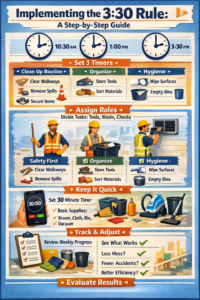
Getting started with the 3:30 rule is easier than you might think. First, pick your three times of day. For a construction crew, that could be end of morning break, after lunch, and before pack up. Make sure they're spread out to catch messes as they happen. Set a timer on your phone or watch to keep it strict, no extending beyond 30 minutes.
Next, assess what's needed in each session. Start with safety first: clear walkways, remove spills, secure loose items. Then move to organization: return tools to storage, sort materials. Finally, handle hygiene: wipe surfaces, empty bins. No need for deep scrubs every time, just consistent upkeep. For industrial settings, include checks on ventilation or filters during these bursts.
Involve your team. Assign roles lightly, like one person on tools, another on waste. This shares the load and makes it a habit. Track progress for a week to see what's working. Adjust as needed, maybe shift times if shifts change. Tools wise, keep basics handy: brooms, cloths, bins. No fancy gear required, though for larger sites, consider cordless vacuums for quick use.
Finally, review weekly. Did sessions reduce overall mess? Fewer accidents? Better efficiency? This step ensures the rule sticks and evolves with your needs.
Real-World Examples in Construction and Industrial Settings
Picture a Dublin based construction firm on a city center build. Mornings are hectic with deliveries, so the first 30 minute session focuses on unpacking and organizing supplies. By afternoon, dust from sawing builds up, so the second burst clears floors and tools. End of day, a quick sweep ensures the site is safe overnight. One contractor I know cut their weekly deep clean time in half this way, freeing up hours for actual building.
In an industrial maintenance firm, say a food processing plant, the rule shines for compliance. Morning session: sanitize counters after night shift. Afternoon: check and clean machinery belts. Evening: general tidy before shutdown. This prevented a potential contamination issue, as regular wipes caught spills early. Compared to full day cleans, it's less disruptive to operations.
For small contractors doing home extensions, it's personal. A solo operator might use sessions to load vans efficiently, avoiding forgotten tools. Event logistics? During a festival setup, quick cleans keep areas clear for safe movement, impressing organizers. These scenarios show the rule's versatility, from big teams to individuals.
Benefits and Potential Drawbacks
The upsides are clear. Efficiency jumps because timed sessions force focus. Safety improves with fewer hazards. Costs drop from less damage or waste. Teams feel empowered, as it's doable without burnout. In numbers, similar timed routines in workplaces have boosted productivity by 15 percent, per management studies.
But it's not perfect. Drawbacks include forgetting sessions on crazy days, or teams resisting if not bought in. In very large sites, 30 minutes might not cover everything, needing tweaks. Compared to hiring pros for deep cleans, it's maintenance, not replacement. Pros: flexible, low cost. Cons: requires discipline, might miss deep issues.
Expert Tips for Success
From years in the cleaning industry, here's insider advice. Pair the rule with visual aids, like site maps marking clean zones. Train staff on quick techniques, such as one pass sweeping. Rotate tasks to avoid boredom. For myth busting: some think short cleans are superficial, but consistency beats occasional overhauls. Another myth: it only works for small spaces. Not true, scale it by dividing areas.
In wet Irish weather, adapt for mud: add boot scrapes in sessions. For events, prep kits with supplies. Measure success not just by looks, but by reduced incidents.
Common Myths About Quick Cleaning Methods
People often say quick cleans don't last. Wrong, regular ones build habits that prevent big messes. Another: it's only for homes. Nope, pros use timed bursts in factories worldwide. Myth: you need special products. Basic tools suffice. Busting these shows the rule's real power.
Conclusion
The 3:30 rule offers a simple yet powerful way to handle cleaning in demanding professional environments. By breaking it into three 30 minute sessions, you maintain order, enhance safety, and save time. Whether you're a contractor dodging Dublin rain or a manager overseeing industrial ops, it delivers results. Give it a try, adjust as needed, and watch your workspace transform. The key takeaway? Small, consistent efforts beat big, sporadic ones every time.
Ready to take your cleaning to the next level? Contact Premier Contract Cleaning for expert help or call us at 086 083 6141
FAQ
What is the 3:30 cleaning rule for Dublin construction sites?
The 3:30 rule involves three 30 minute cleaning sessions daily to keep sites tidy. In Dublin, where sites must follow HSA guidelines, this helps clear debris quickly, reducing slip risks from rain or mud. It's ideal for busy builds, ensuring compliance without halting work. For example, use morning for tool organization, afternoon for waste removal, and evening for safety checks.
How does the 3 30 method of cleaning help Irish industrial firms?
This method spreads 90 minutes of cleaning over the day, focusing on urgent tasks. For Irish factories, it maintains hygiene standards under EU regs, like preventing dust buildup that could affect air quality. One firm I advised saw fewer machine jams after implementing it, as quick wipes caught issues early. It's flexible for shift workers too.
Can small contractors in Ireland use the 3:30 rule effectively?
Absolutely. Small teams often lack time for full cleans, so short bursts fit solo or duo operations. In areas like Swords or Dundrum, where home projects are common, it keeps vans and sites organized, impressing clients. Start with basic tools, and it cuts end of day fatigue.
What are local search tips for the 3:30 rule in event logistics Dublin?
People often search "quick cleaning hacks for Dublin events." The rule works by timing sessions around setup, like clearing stages mid day. It ensures safe, professional spaces for festivals or conferences, aligning with local council rules on waste. Teams report faster breakdowns, saving hours.
Is the 3:30 rule compliant with Irish workplace safety laws?
Yes, it supports HSA requirements for hazard free sites. Regular sessions spot risks like loose cables or spills, preventing accidents. Unlike ignoring messes until inspections, this proactive approach builds a culture of safety, potentially lowering insurance costs.
How to adapt the 3:30 cleaning method for wet weather in Ireland?
Ireland's rain makes sites slippery, so include mud removal in sessions. Use scrapers or mats, and focus on high traffic areas. For outdoor logistics, quick dries with cloths prevent water damage. This tweak keeps the method effective year round.
What if the 3:30 rule doesn't fit my schedule in a Dublin warehouse?
Customize it. If shifts are long, shorten to two 45 minute sessions or add a fourth. The goal is consistency, not rigid times. Warehouses in Santry benefit from this, as it handles stock clutter without disrupting flows.
Does the 3:30 rule replace professional cleaning services in Ireland?
No, it's for daily upkeep. For deep cleans, like post construction or annual industrial scrubs, pros like us handle the heavy lifting. It complements services, extending their benefits longer.
Learn More About Our Commercial Cleaning Services

Catalin Fatul is the founder and expert behind Premier Contract Cleaning, dedicated to providing top-notch cleaning solutions and tips. With a passion for cleanliness and a commitment to quality, Catalin brings years of experience in the cleaning industry to help readers maintain pristine spaces. Whether it's offering the latest cleaning hacks or recommending the best products, Catalin's mission is to make cleaning efficient, effective, and enjoyable.
How Clean Workspaces Can Boost Employee Productivity and Morale Read More
In today’s competitive business world, companies are constantly searching for ways to improve efficiency, creativity, and overall employee satisfaction. While technology upgrades and team-building exercises are often the go-to solutions, there’s one simple yet powerful factor that often gets overlooked — a clean workspace. At Premier Contract Cleaning, we’ve seen firsthand how maintaining a spotless […]
What’s Included in a Professional Deep Cleaning Service Read More
No matter how often your office or business premises are cleaned, there comes a time when regular cleaning just isn’t enough.Dust builds up in corners, grime hides behind furniture, and certain spots get overlooked during daily routines. That’s where professional deep cleaning comes in — a thorough, top-to-bottom process that refreshes your entire workspace and […]
Eco-Friendly Commercial Cleaning: Why Going Green Is Good for Business Read More
Running a successful business in Dublin means paying attention to every detail — from how your clients are greeted to how your office space looks and feels. Cleanliness plays a much bigger role than most people realise. It shapes your company’s image, boosts employee morale, and even impacts health and productivity. But with dozens of […]